ESD Flooring Solutions
Static Dissipative and Conductive Floors for Superior Static Control
What is ESD Flooring?

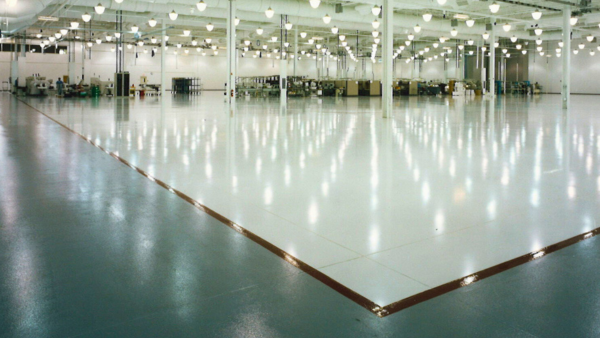
Electrostatic discharge (ESD) flooring is a static-dissipative or conductive floor system that safely grounds static electricity before it can damage sensitive equipment, ignite chemical vapors, or shock employees.
As a person walks across a standard epoxy floor, it is very easy to build up static charge through friction because epoxy acts as an insulative material. Where there is static, there is electro-static discharge. This can cause mayhem in certain industries.
ESD floors, also known as static-dissipative floors (1 Mohm to 1000 Mohms) or conductive floors (.025 Mohms to 1 Mohms), provide superior static control, inhibiting static electricity on a person or from reaching sensitive equipment.
Most facilities specify ESD flooring to meet ANSI/ESD S20.20, the industry standard for electrostatic discharge control programs, and confirm compliance with post-installation resistance testing.
Quick Access to Resources
ESD Flooring Systems
Stonhard manufactures six ESD flooring systems, each formulated for a different level of conductivity and a different facility type

Stonlux ESD

Stonshield ESD is a decorative, slip-resistant epoxy floor with outstanding static control. Designed for high-traffic areas where components sensitive to electrostatic discharge are present, such as:
- AGV corridors
- pharmaceutical processing
- electronics manufacturing
Stonshield ESD

Stonclad ESD

Stonkote ESD is a self-leveling, smooth and seamless conductive coating formulated for static control and long-term durability. Stonkote ESD flooring is ideal for:
- server rooms
- pharmaceutical corridors
- mixing rooms
- cleanrooms
Stonkote ESD

Stonchem 691 is a conductive, spark-proof, highly cross-linked novolac epoxy coating that utilizes advanced carbon nanotube technology in its formulation. Stonchem 691 flooring is ideal for:
- pharmaceutical facilities
- electronics manufacturing facilities
- AGV and AMR warehouses
- solvent storage areas
Stonchem 691

Stonchem 62X is a series of conductive, spark-proof, highly cross-linked novolac epoxy systems that utilize advanced carbon nanotube technology in their formulations. Stonchem 62X floor and lining systems are ideal for:
- secondary containment & tank farms
- explosion-proof rooms
- solvent storage areas
Stonchem 62X
What Are the Benefits of ESD Flooring?
Stonhard ESD flooring provides superior static control while providing a number of other performance and aesthetic benefits.

Protection Against Electro-Static Discharge

High Gloss

Self Leveling

Smooth Finish

High Strength

High Traffic

Slip Resistance

Textured Finish
Where Is ESD Flooring Used?

Aerospace AGV areas
Aerospace AGVs often carry large, heavy parts like fuselage sections or engine components. ESD flooring in these areas must be durable enough to withstand high traffic and heavy loads while maintaining static control. In addition, aerospace facilities work with volatile chemicals, fuels, and composites that can ignite due to static. ESD flooring helps reduce this risk.

Pharmaceutical Packaging
ESD flooring in pharmaceutical packaging areas dissipates static electricity, reduces the risk of contamination, prevents fires or explosions, and ensures compliance with industry regulations like FDA and GMP.

Pharmaceutical Granulation Rooms
ESD flooring in pharmaceutical granulation rooms is essential for controlling static discharge, which can cause fine powders to become airborne, leading to cross-contamination, safety hazards, and process inefficiencies.

Data Centers
ESD seamless floors reduce static risks for servers, networking equipment, and other critical IT infrastructure.

Cleanrooms
ESD seamless flooring offers an easy-to-clean surface, chemical resistance, and static control. Stonhard ESD flooring is built to maintain the highest standards of cleanliness while being durable, easy to maintain, and customizable.

Pharmaceutical Processing
In pharmaceutical processing, maintaining a controlled, contamination-free environment is critical. ESD flooring plays a crucial role in ensuring product integrity, safety, and compliance with industry regulations.

Electronics Manufacturing
ESD flooring is essential in electronics manufacturing to prevent electrostatic discharge that can damage sensitive components, ensuring product reliability and reducing costly failures. It helps facilities comply with industry standards and enhances workplace safety.

Hospital AGV Corridors
Crucial for maintaining the reliability of sensitive medical equipment and the AGVs themselves, polymer ESD flooring is durable, easy to clean, and resistant to chemicals, making it well-suited for the rigorous hygiene standards of healthcare environments. Its seamless surface also minimizes trip hazards and supports smooth AGV navigation.

Semiconductor Facilities
In semiconductor facilities, where even the smallest electrostatic discharge can damage microchips and wafers, ESD flooring is essential to prevent costly defects and production delays. Stonhard ESD flooring ensures compliance with industry standards and enhances workplace safety.

Aerospace Facilities
ESD flooring is essential in aerospace facilities to protect sensitive electronic components, reducing the risk of electrical failures in avionics, satellite technology, and manufacturing equipment. Designed for high-traffic and precision environments, ESD flooring enhances safety, reliability, and operational efficiency.

Semiconductor Fabs
ESD flooring safeguards delicate microchips, wafers, and reticles from static discharge. Conductive flooring effectively grounds static charges, preventing damage, lowering costs, and ensuring the safety of electronic components.

Explosion-Proof Rooms
Conductive or static-dissipative flooring works with grounding systems to carry away excess electrical charge. This lowers the risk of ignition in areas where flammable substances may be in the air or on surfaces.
Watch to Learn More About ESD Flooring


ESD Flooring Installation Process
Stonhard is a single source manufacturer and installer of high-performance floors, founded in 1922. Our seamless, long-lasting, easy-to-clean systems are engineered for both industrial and commercial markets. We also bring the same performance to our wall and lining systems.
From the start of your project to its finish, from specifications and design to project management and final walkthrough, you work with us directly. Territory Managers, Project Engineers, Architectural/Engineer and Design Representatives, Construction Management teams and Installation and Application Crews work for you and with you. For more than a century, we've been delivering a proven, single-source service, covering both your products and installation.
How We Install Your ESD Flooring System

1. Inspection and Testing
A Stonhard Territory Manager inspects the slab and, when needed, runs Calcium Chloride or Relative Humidity testing before recommending an ESD system.
The area is inspected prior to installation to determine the right system required for the area and the type of testing required. Based on the condition of the slab, use of the space, or age of the building, different tests may be required, such as Calcium Chloride or Relative Humidity testing to determine the moisture content of the slab or contamination. Proper conductivity requirements are discussed with the customer to determine which ESD system is required.

2. Substrate Preparation
Substrate preparation, whether media blasting, diamond grinding, or de-greasing, is the step that determines whether the finished ESD floor bonds and performs.
Based on the information found from these tests and onsite visits, the proper preparation procedure is determined. This may include mechanical preparation with media blasting, diamond grinding, and removal by jack hammers and chipping guns. If slabs are determined to be contaminated with oils, de-greasing may be necessary to achieve proper adhesion. Preparation is the most important process to ensure there is a proper bond to the substrate.

3. Application
Trained crews apply the system, ground it with grounding plates and joint bridge details, then test ESD readings after cure to confirm the floor performs to spec.
Installation of the system will vary depending on the specific system (broadcast, mortar, self-leveler). Common installation procedures vary from screeding and troweling the material, squeegeeing and rolling the material, and broadcasting the material. Grounding plates and joint bridge details are utilized to properly ground the flooring system. All details, including waterproofing, cove base, penetrations, drains, etc., are discussed prior to installation. These will be handled properly to ensure a good quality ESD floor installation with professionally trained installation teams. After application and cure of the ESD flooring, ESD properties are tested to insure proper readings for the space.
Cleaning and Maintenance

Stonhard ESD floors clean the same way most seamless resinous floors do, but each facility has its own conductivity and chemical-exposure requirements to protect.
Seamless floors are known for their easy cleaning and maintenance procedures, however each environment has its own specific requirements and standards to meet. Stonhard Territory Managers work with customers directly to provide the right cleaning solution for the specific environment. In addition, Stonhard's division Stonkleen provides cleaning products that are tough on dirt and stains, easy to use, sustainable, and formulated to maintain Stonhard seamless flooring systems.
Project Profiles
Explore projects that utilized ESD floors to protect products, equipment, and people in their facilities.



Expert Guidance & Resources
We want you to make informed decisions about your projects. Learn more about ESD flooring from experts here.

The Future of Static Control: Carbon Nanotubes in Electrostatic Flooring
Electrostatic discharge (ESD) threatens electronics manufacturing, pharmaceuticals, and aerospace, where a single event can damage components, contaminate sterile spaces, or create safety hazards. Traditional conductive flooring relies on additives, but the high filler concentrations needed for reliable performance often weaken durability and dull appearance. Carbon nanotube (CNT) technology solves this, forming efficient conductive networks at far lower filler volumes while preserving the strength and finish your facility depends on.

Protecting Sensitive Environments with ESD Flooring
Electrostatic discharge (ESD) might be a silent force, but in the wrong setting, it can be catastrophic. In electronics manufacturing facilities, the smallest discharge can take down critical systems, destroy sensitive components, and endanger staff. That's why ESD protection is essential.

Top 5 Areas for ESD Flooring
Electrostatic discharge (ESD) is the sudden flow of electricity between two electrically charged objects, more specifically, it is a high-current event (115 A) with a short duration (1–100 ns), per ANSI/ESD S20.20. ESD can be caused by contact, an electrical short, or when a current flows through an electrical insulator and the voltage applied across it exceeds the breakdown voltage.
Frequently Asked Questions
Got questions? We've got answers. This FAQ section covers the most common inquiries about ESD flooring to help you make informed decisions.
Static-dissipative floors typically measure 1 Mohm to 1000 Mohms, and conductive floors measure .025 Mohms to 1 Mohm. Facilities usually specify one range or the other based on ANSI/ESD S20.20, the standard most electrostatic discharge control programs are built around.
Static-dissipative flooring slows the release of static charge, which protects sensitive electronics without creating a fully grounded surface. Conductive flooring grounds charge almost instantly, which is why it's specified in higher-risk settings like explosion-proof rooms and solvent storage areas.
Yes. Stonshield ESD combines a textured, slip-resistant surface with conductive static control, which is why it's used in high-traffic areas like AGV corridors and electronics manufacturing floors.
Stonlux ESD is a self-leveling system built for cleanrooms, labs, and data centers. Stonshield ESD is a textured system built for high-traffic AGV corridors and pharmaceutical processing areas. Facilities running both space types often specify both systems.
Installation time depends on the system, the substrate condition, and the square footage. Self-leveling and MMA-based systems generally install and cure faster than traditional epoxy broadcast systems, which is why Stonhard's Territory Managers confirm substrate condition before recommending a system and timeline.
After the system cures, installation crews test the floor's resistance readings to confirm it meets the static-dissipative or conductive range the space requires before the project is signed off.


